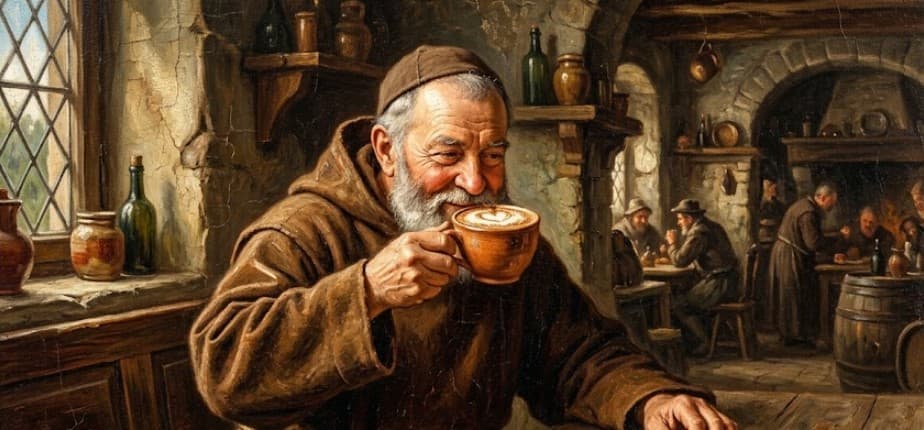
You order one without thinking about it. It is named after a religious order — but not for the reason almost everyone thinks.
A cappuccino, please.
You order one without thinking about it. It is named after a religious order — but not for the reason almost everyone thinks.
The Friars Were Named After a Hood
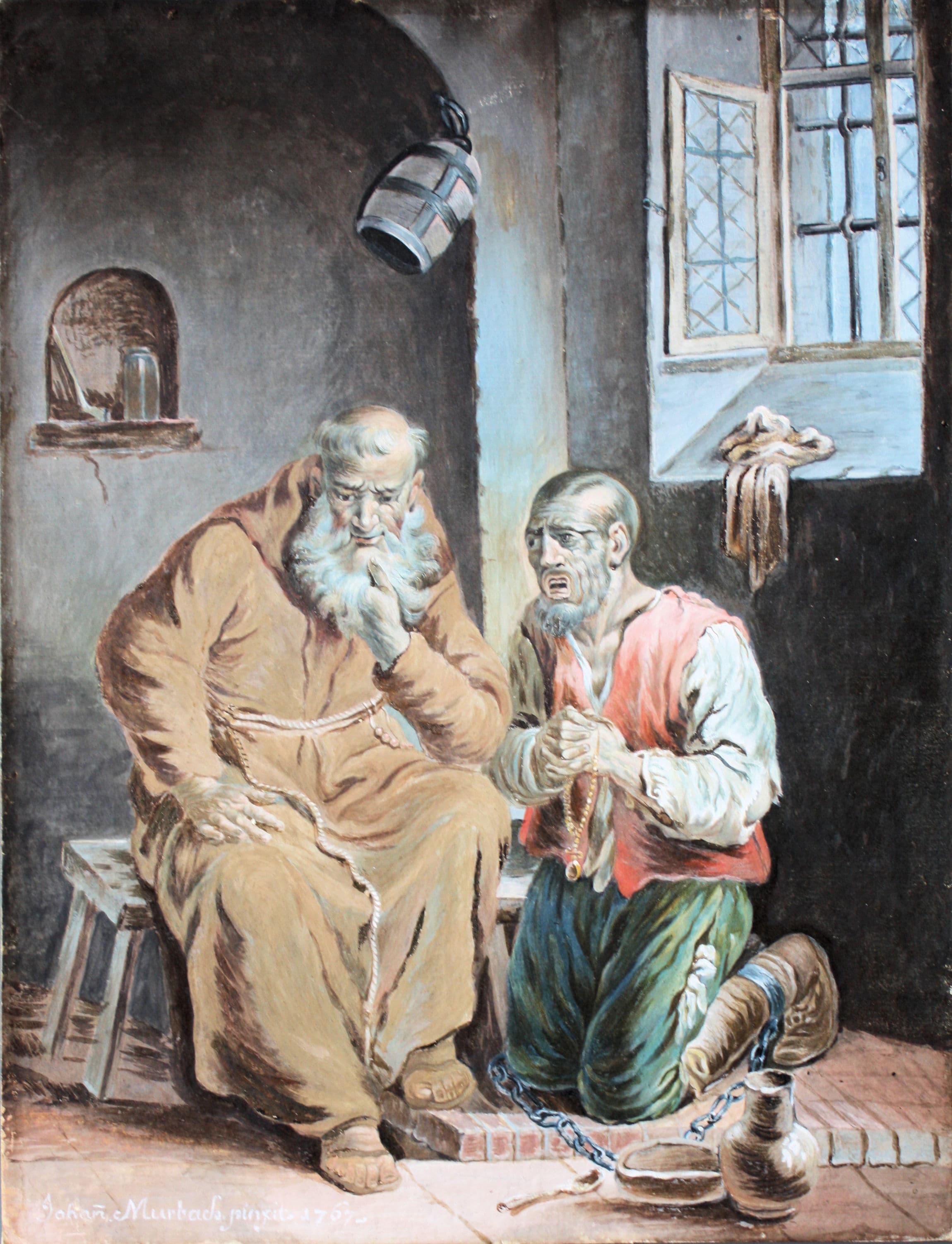
In 1525 a group of Franciscans decided their order had gone soft. They wanted to live the way Francis of Assisi had lived, in the habit they believed he had worn: plain, rough, and finished with a long pointed hood.
The Italian for hood is cappuccio. Behind it sits cappa, a cape, and behind that the Latin caput, head — the same root that gives us cap. People saw these men going about under their unmistakable cowls and started calling them cappuccini, the hooded ones. The nickname stuck. It is still their official name today: the Order of Friars Minor Capuchin.
They are not a historical curiosity either. There are Capuchins in that same brown habit today, in about a hundred countries — which means somewhere this morning, a man wearing the reason it has that name is very probably drinking one.
So the friars are named after the hood. The drink is not. That is where everyone goes wrong.
Vienna Named a Colour
A Capuchin habit is a very particular brown. Not black, not tan, but a warm reddish shade. Everyone knew it, because in Catholic Europe there were friars on every street.
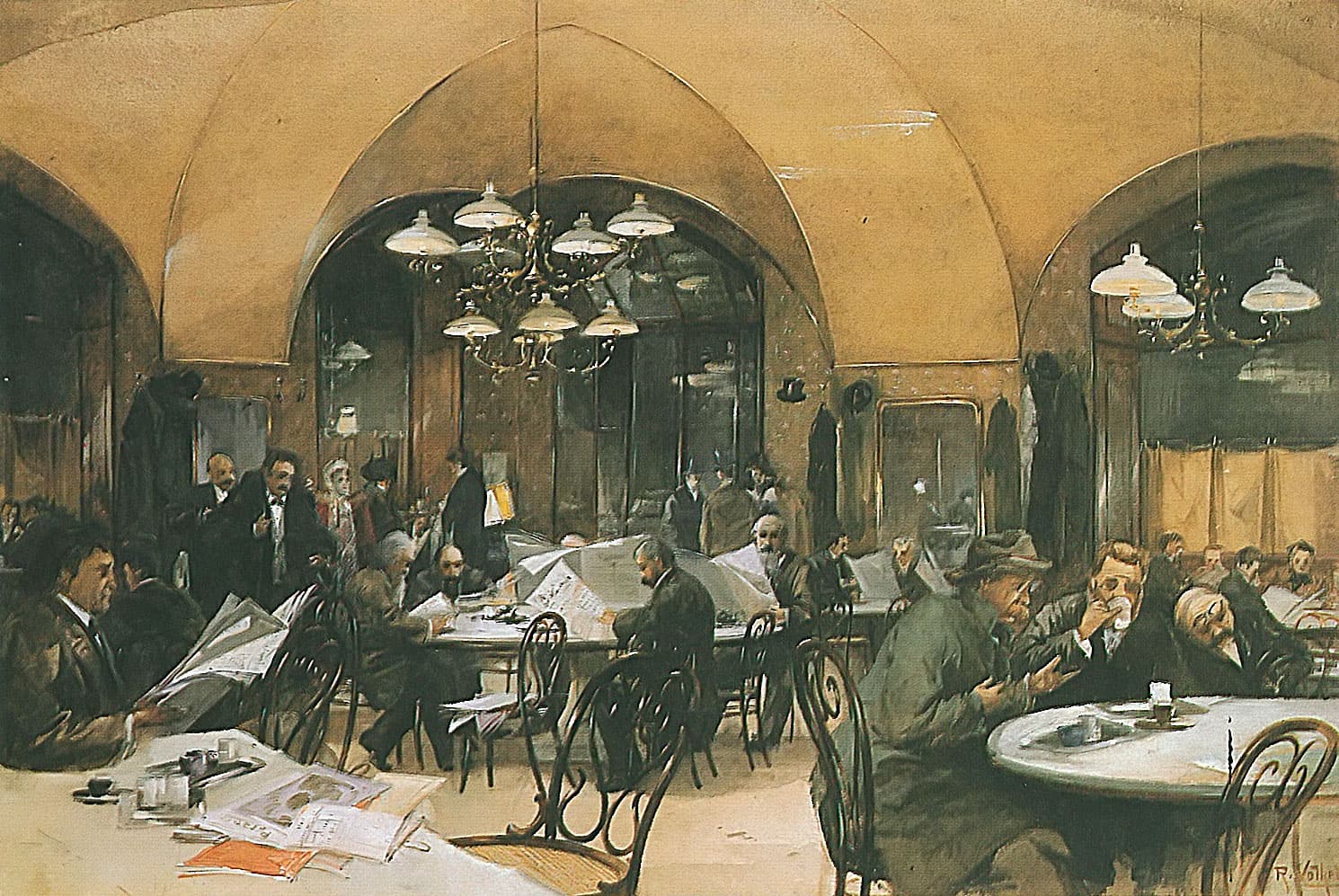
By the late 1700s, coffee houses across the Habsburg empire were selling a Kapuziner: black coffee with a few drops of cream, stirred in until it hit that exact brown. The same menus offered a Franziskaner — more cream, a lighter shade, after the Franciscans’ paler habits.
Vienna had built a colour chart out of religious orders and was using it to order breakfast. It still does. A Kapuziner is on the menu there to this day.
The Hood Has Nothing to Do With It
You will often hear that the drink is named for its shape: the white foam sitting on the dark coffee, like a pale hood on a brown robe. Good story. Wrong story.
The name is about colour and nothing else. The earliest Italian descriptions are blunt about it. A cappuccino, they say in the 1800s, is black coffee with a few drops of milk or cream, which give it the colour of a Capuchin’s tunic.
The hood explanation came later. Modern cappuccinos really do have a foam cap, and the resemblance sits right there in the cup, so people reached for it. The picture arrived after the word, then explained it backwards.
How Italy Made the Cappuccino We Actually Drink
The word travelled with the empire. Trieste was the Habsburgs’ great port, an Italian-speaking city full of Viennese cafés, and Kapuziner needed no translating there. Italians already said cappuccino. It meant a friar.
But the drink that crossed the border is not the drink you order. Italy kept the name and rebuilt everything underneath it. That took three inventions.
The coffee. A Kapuziner was ordinary brewed coffee. Italy threw out the base and put espresso in its place — hot water forced through fine grounds under pressure, filling a small cup in about half a minute. Angelo Moriondo patented a steam machine in Turin in 1884. Luigi Bezzera, in Milan, worked out how to brew cup by cup and won his patent in 1902. Desiderio Pavoni bought it from him in 1903 and started manufacturing in earnest.
The milk. This is the change that matters most. A Kapuziner got a spoonful of cream, because cream kept and fresh milk did not. The new machines had a steam pipe on the side, and somebody worked out that you could sink it into a jug of milk and blow air through it. Milk stopped being something you poured. It became something you could build with.
The pressure. Steam machines managed two bar or so, which is nowhere near enough. After the war Achille Gaggia patented a spring-lever piston that drove water through the grounds at eight to ten bar. Out came crema, the dense hazel layer that sits on a proper shot. Gaggia machines reached café counters in 1948. Then, in 1961, Faema’s E61 replaced the lever with an electric pump, and the drink finally became consistent enough to export. That machine is why the cappuccino you buy in Seattle is an Italian one and not a Viennese one.
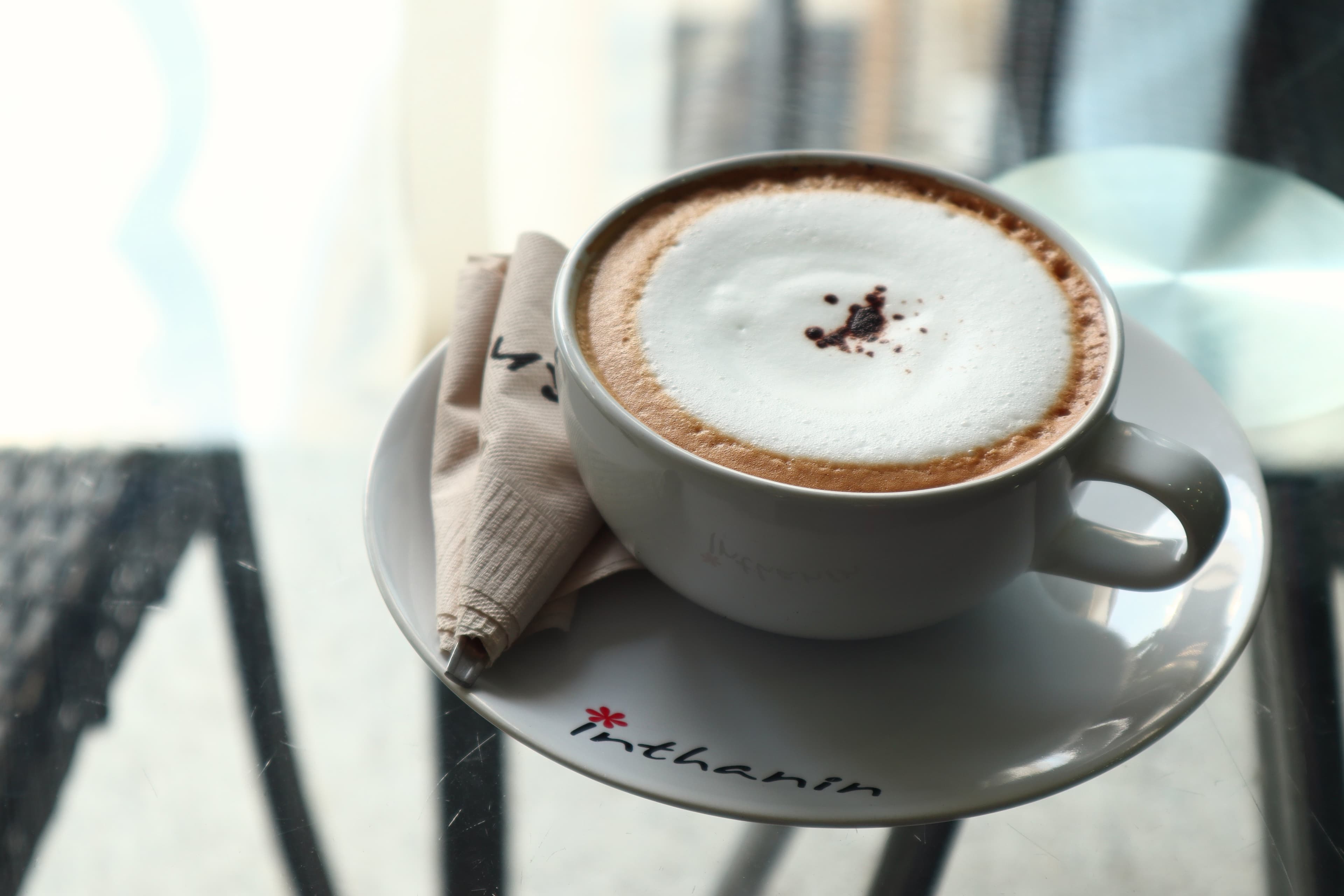
The result has a structure. Espresso, hot milk and foam in rough thirds. A cup of 150 to 180 millilitres. Dark crema below, white foam above. The Viennese version was coffee with cream stirred into it. Italy kept four syllables and changed everything else.
Then, having built the thing, Italy decided when you may drink it. A cappuccino belongs to the morning, with a pastry, standing at the bar. Order one after dinner and nobody will stop you, but you will have marked yourself as a visitor. Hot milk is breakfast. Espresso is what follows a meal.
Fun Fact
Cappuccino is a diminutive. That -ino is the same ending that shrinks a pane into a panino. So the word does not mean "Capuchin coffee." It means little Capuchin. Every morning, millions of people walk into a café and order a small friar.
Sources
Wikipedia, "Cappuccino" — the Kapuziner on Habsburg menus from the late 1700s, the Franziskaner, the 19th-century Italian definition based on the colour of the Capuchin tunic, and the modern proportions and cup size.
Wikipedia, "Order of Friars Minor Capuchin" — the 1525 reform and the return to the habit of Francis of Assisi.
Wikipedia, "Espresso machine" — Moriondo’s 1884 Turin patent, Bezzera’s 1902 patent, Pavoni’s purchase of it in 1903, why steam machines could not raise enough pressure for crema, Gaggia’s spring-lever piston at eight to ten bar, and the pump-driven Faema E61 of 1961.
Wikipedia, "E-61" — the Gaggia lever design that preceded it, and the E61’s part in making espresso consistent enough to export.
Wiktionary, "cappuccino" — the cappuccio / cappa / caput chain and the diminutive ending.
More in Things we use
Things we use
Why Does an Hour Have 60 Minutes? Blame Babylon
Sixty seconds to the minute, sixty minutes to the hour, three hundred and sixty degrees to a circle. Not one of those numbers is a ten. We decimalised money, distance and weight — France even tried to decimalise the clock — and yet time still counts in sixties, because a civilisation in southern Iraq liked a number that divides cleanly.
Things we use
Measuring The Historical Yard
Before standardized measurement, kingdoms used body parts as units. The yard was once literally the length of a king's arm. Explore the chaotic world of historical measurement.

Things we use
Ancient Medicines Lost for 1000 Years
The fall of Rome didn't just end an empire — it buried centuries of medical knowledge. Discover which ancient remedies were lost to history and how some were rediscovered.