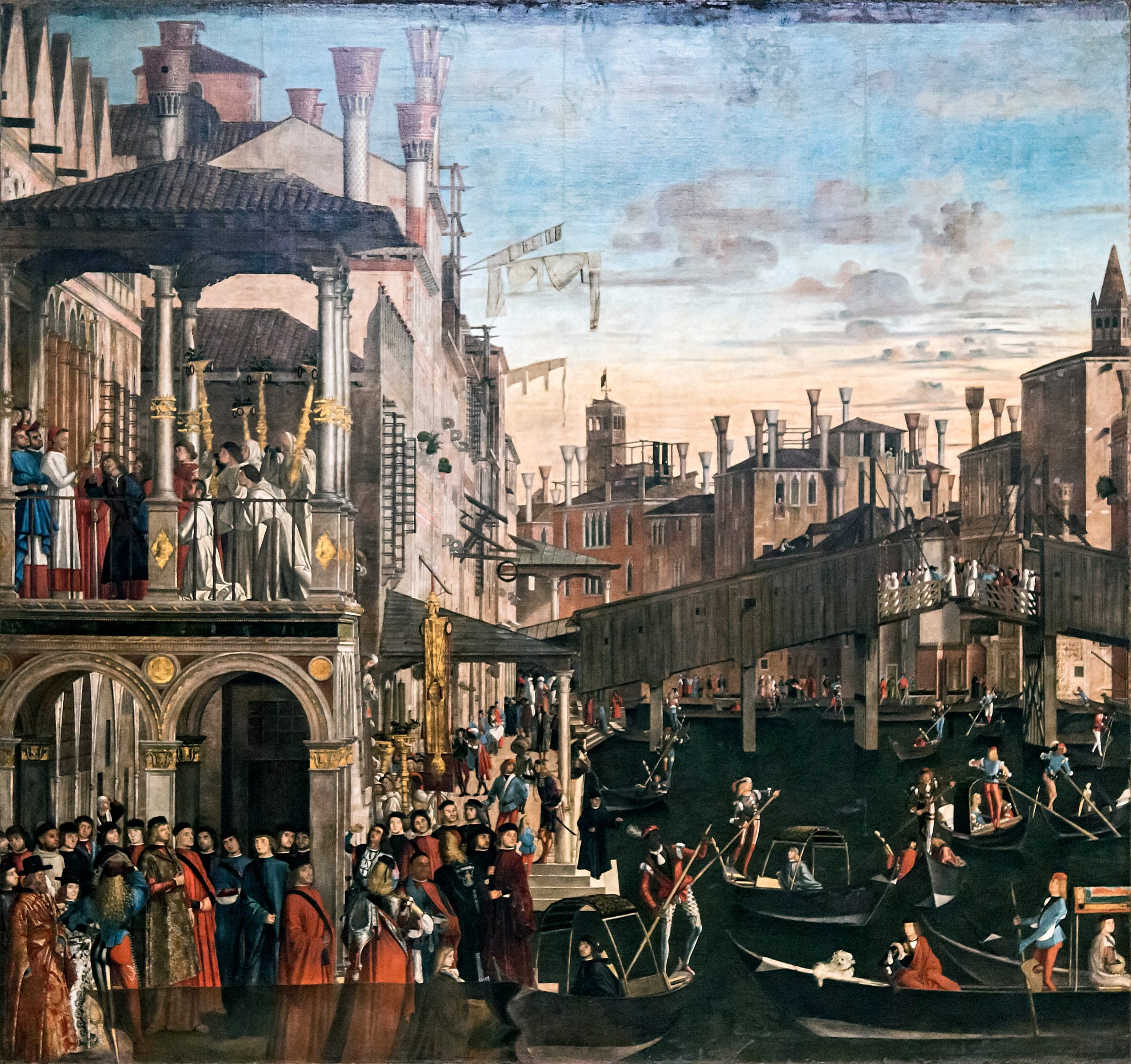
It is the friendliest word in Europe — warm, quick, and said twice, once arriving and once leaving. It also began life as a way of telling someone that you belonged to them, and the word hiding underneath it is older and a great deal darker.
It is the friendliest word in Europe. You say it to people you like, and you say it twice — once arriving, once leaving. Italians will fire off three or four in a row to get off the phone. It is warm, quick and completely relaxed.
It also began life as a way of telling someone that you belonged to them.
It Started in Venice
Ciao is not really Italian. It is Venetian, and the full phrase was s-ciào vostro — "I am your slave."
Nobody meant it literally. It was a polite formula, the Venetian version of "at your service" or "anything you need, just ask." A shopkeeper said it to a customer. A friend said it to a friend. Everyone understood it as flattery rather than fact, the same way nobody signing a letter "yours truly" is offering to be owned.
Then the phrase wore down, the way phrases do when people use them fifty times a day. Vostro dropped off the end. The awkward cluster of sounds at the front of s-ciào — a hiss and a catch that standard Italian has no use for — went with it. What was left was ciao, which by then meant nothing much at all. That is exactly why it spread.
A trace of the old meaning did survive, though. In Italian you can still say "Oh, va be’, ciao!" and mean something closer to "oh well, forget it" — the shrug of a man who has no say in the matter, which is precisely where the word came from.
The Word Underneath Is Older and Darker
The Venetian s-ciào comes from schiavo, still the Italian word for slave. That comes from the medieval Latin sclavus, which Latin had taken from the medieval Greek sklavos. And that word is the same one that gives us Slav.
So many people from the Slavic-speaking lands — especially the Balkans, on Venice’s doorstep — were captured and sold in the early Middle Ages that the name of the people became the word for the condition. The trade ran through the great merchant cities, and Venice was one of the busiest. The same root gave Spanish esclavo, French esclave, German Sklave and English slave. It also, untouched, gave Slovenia, Slovakia and Slovene.
There is a further twist if you want one. Etymologists still argue about where the Slavs got their own name, but one long-standing suggestion is that it comes from a root meaning "word" or "speech" — the people you could understand, as opposed to the ones whose talk sounded like noise. If that is right, a name that started out meaning roughly "the people who speak" ended up as the word for a person with no say in anything.
So the full journey runs: a people, then a chain, then a courtesy, then "hi."
Half of Europe Was Doing the Same Thing
Venice was not unusual here. Politeness has almost always involved pretending you are the smaller person in the room.
Go to Vienna, Munich or Budapest and people still greet each other with servus — Latin for slave or servant, doing precisely the same job. Poland has serwus. The Hungarian szia is generally traced back to the same word. Spanish speakers had servidor, "your servant." English is no better: letters ended with "your obedient servant" well into the 1800s, and we still sign off "yours" without once thinking about what we are handing over.
Every one of these is the same small performance, repeated so often that nobody hears it any more. The difference is that Italy’s version got loose and travelled.
Out of Venice
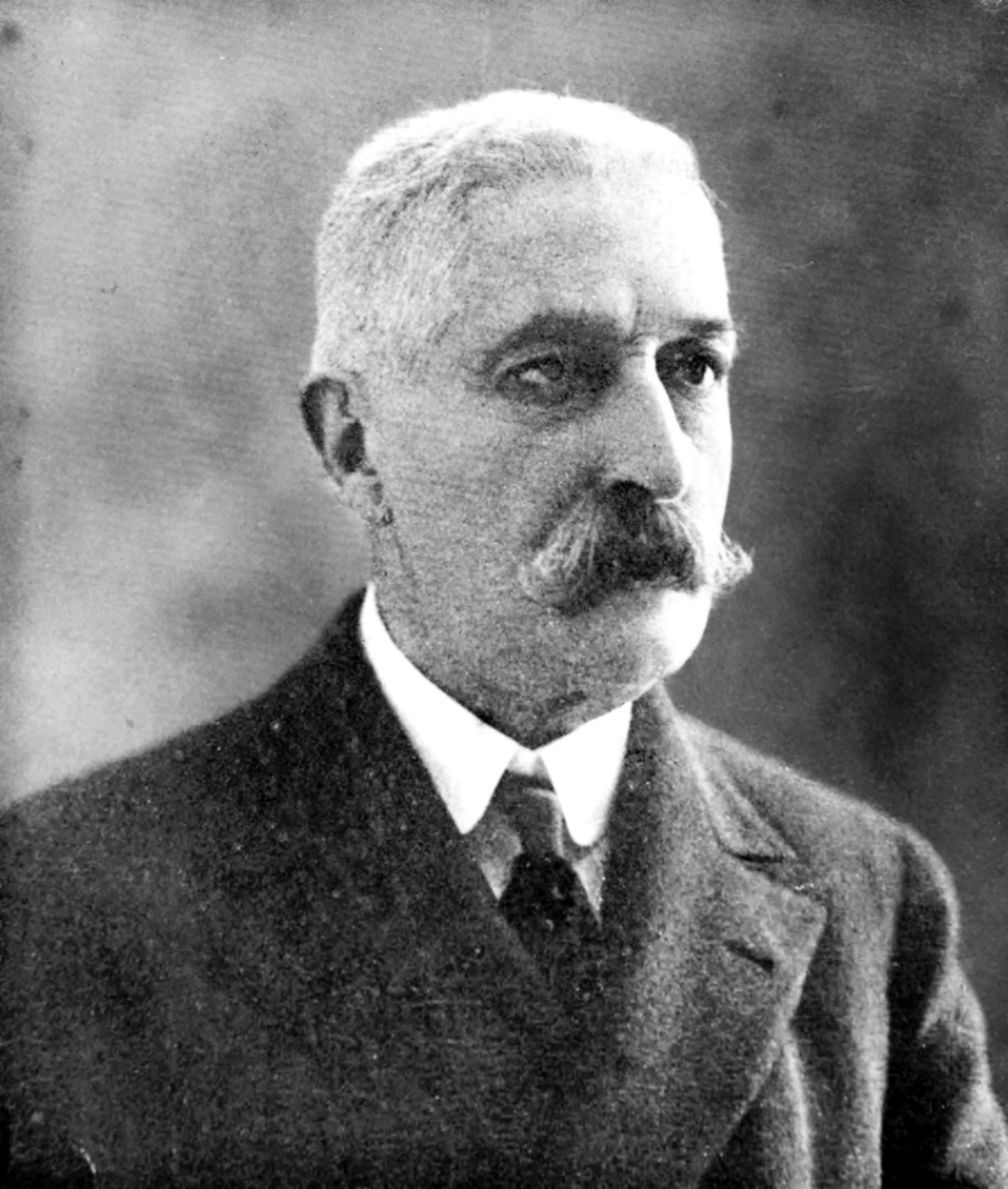

Ciao was picked up across northern Italy in the late 1800s and early 1900s, shedding the last of its servility on the road. It had already reached print in 1874, in Giovanni Verga’s novel Eros, where a character simply says it. From the north it worked its way down the rest of the country until it was ordinary Italian rather than a regional oddity.
English speakers were introduced to it by Ernest Hemingway, who had driven ambulances in Italy during the First World War and put the word into A Farewell to Arms in 1929.
Out of Italy
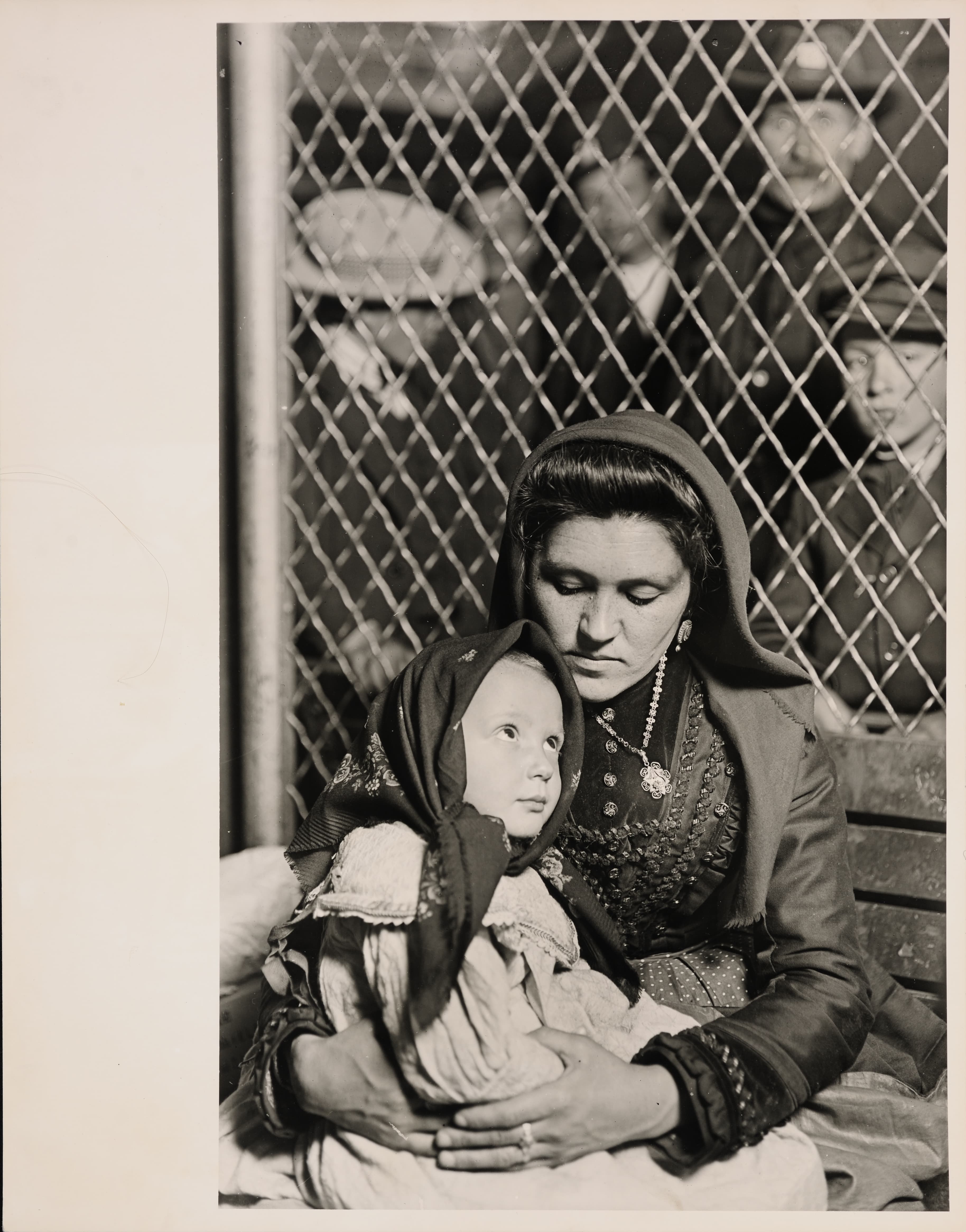
The emigrants did the rest, and they did most of it in South America.
Chau is now the everyday goodbye in Argentina, Uruguay and Paraguay. Chao is the standard farewell in Chile, and turns up across Colombia, Peru, Ecuador, Bolivia, Venezuela, Panama and Costa Rica. Brazil says tchau. In Spain, where adiós is the normal word, chao survives as the slightly livelier option. Australia picked it up through its Italian communities, and so did South African English.
It went further than that. Italian contact with the Horn of Africa carried it into Amharic and Tigrinya as chaw, and into Somali. France took it as tchao, slang enough to title a 1983 film. Germany and Switzerland took tschau. The Czechs, Slovaks and Slovenes took čau, the Latvians čau, the Lithuanians čiau, the Maltese ċaw, the Turks çav, the Greeks tsao, the Russians and Bulgarians and Macedonians chao. Japan took it as chao. Malaysia took cau, and then went one better by turning it into a verb meaning "to leave."
Count them up and the tally runs past thirty languages, on five continents, from a phrase that started out as small talk on a Venetian bridge.
What Happened to It on the Way
Here is the part most people never notice. In Italian, ciao works for both hello and goodbye, which is genuinely unusual — the same trick as aloha, shalom, salām and the Korean annyeong, and not much else.
Almost nobody else took both halves. In English, Portuguese, Spanish, Dutch, Greek, Russian, Turkish, Hebrew, Maltese, Albanian and most of Latin America, it means goodbye and only goodbye. Japan did the opposite and kept it as a hello. A handful of languages — Czech, Hungarian, Romanian, Slovene, Latvian, Swiss German, and Serbian, Croatian and Bosnian — took the full Italian version and use it at both ends of a conversation.
The doubling rules travelled too. Ciao ciao and tchau tchau mean "bye bye." Three or four of them, fired off with tiny gaps, mean "bye, I really have to go." Portuguese even built a smaller one, tchauzinho, a little bye. Slovak speakers reach for čau partly because it is shorter and more modern than their own ahoj.
Fun Fact
Italians think ciao is too casual. It is for friends and family, and using it on a stranger, a shopkeeper or someone much older comes across as presumptuous — the safe choice is buongiorno. Which means the word that literally offers a stranger your enslavement is now considered a bit too familiar for the man selling you coffee.
Sources
Wikipedia, "Ciao" — the Venetian s-ciào vostro, the sclavus / Greek sklavos / Slav chain, the spread through northern Italy, Hemingway’s A Farewell to Arms (1929), and the language-by-language list of spellings and meanings.
Wiktionary, "ciao" — the borrowings and their spellings in each language.
Wordhistories.net, "origin of slave and Slav, of robot and of ciao" — how the ethnic name became the word for the condition.
Etymonline, "slave" — the Slavus to sclavus to slave chain.
La Gazzetta Italiana, "Ciao: I Am No Longer Your Slave" — Verga’s Eros (1874) and the spread out of Venice.
Italy Explained, "The History of the Word Ciao" — the modern formality rules and why Italians avoid it with strangers.
More in Things we say

Things we say
Why does it Costs an Arm and a Leg?
This common expression for something expensive has a surprising history tied to early portraiture, war, and the price people literally paid to be remembered.

Things we say
The Discovery of The Exclamation 'Eureka!'
Archimedes leaping from his bath shouting 'Eureka!' is one of history's most famous moments. But what really happened, and why does this ancient Greek word still echo today?

Things we say
Where Does the Word 'Amen' Come From?
Spoken by billions across religions and languages, "Amen" is one of the most universal words in human history. Its roots in ancient Hebrew and Egyptian religion tell a remarkable story.