Spoken by billions across religions and languages, "Amen" is one of the most universal words in human history. Its roots in ancient Hebrew and Egyptian religion tell a remarkable story.
Amen is a one of the oldest words still in use today. Its primary use is as a way of adding individual agreement to a prayer or other solemn religious ceremony and commonly used in Jewish, Christian, and Muslim communities. You don't have to be religious to say "amen," however! Many people often emphasize their agreement with someone's statement by uttering and emphatic "amen!" But what are its origin? Who used it first and how? How was it adopted by everyone else?
Origin of The Word
Amen is a biblical word found first in the book of Numbers and Deuteronomy and repeated 30 times in the Old Testament. One theory is that the word was born as an abbreviation form of "El melech ne'eman", meaning "God Faithful Ruler". Possibly even from the word 'āmán which means to support, to be faithful and to trust and stand firm. Lastly, there is a also connection to the word 'emet, which means truth.
Adoption of The Word
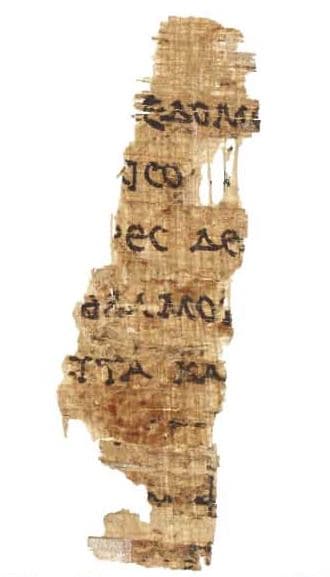
It came to us through a series of linguistic adoptions. Hebrew to Aramaic, to Greek, to Latin, to modern languages like English. Amen was not translated but only transliterated into Greek. This means that the sound remained the same but it was written differently to accommodate the new language. Most of the new testament gospels were written in Greek. Amen came to Latin late during the period where Christianity became the state religion of Rome. The adoption of "Amen" in late Latin can be found in many ancient scripts like the one from the 10th Century found in the Vatican Archives.
Alternate Pagan Theory
There is a theory that does not find validation in the academic word. This theory explains that the origin of the word Amen, could come from the Egyptian god Amun or as sometimes mentioned Amen. This god was a minor god until 1700 BC, the same time that the Jewish people lived in slavery in Egypt. It is a possibility that the two names somehow tangled and influenced each other.
Today's Meaning
In this secular world the meaning has at times lost its religious reverence. It is not uncommon to hear people underline their full agreement on any topic saying "Amen to that".
More in Things we say
Things we say
Ciao Really Means "I Am Your Slave"
It is the friendliest word in Europe — warm, quick, and said twice, once arriving and once leaving. It also began life as a way of telling someone that you belonged to them, and the word hiding underneath it is older and a great deal darker.

Things we say
Why does it Costs an Arm and a Leg?
This common expression for something expensive has a surprising history tied to early portraiture, war, and the price people literally paid to be remembered.
Things we say
The Discovery of The Exclamation 'Eureka!'
Archimedes leaping from his bath shouting 'Eureka!' is one of history's most famous moments. But what really happened, and why does this ancient Greek word still echo today?