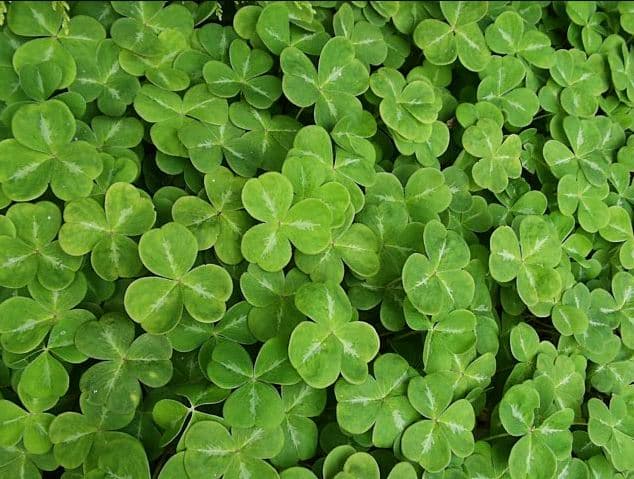
In March finding a Shamrock is considered very lucky. The three leaves of a Shamrock are meant to represent hope, faith and love. A great omen. However, only the rare four leave clover is considered a
Finding a shamrock is considered very lucky. The three leaves of a shamrock are meant to represent hope, faith, and love. However, only the rare four-leaf clover is considered a bearer of good luck. The word “shamrock” derives from the Gaelic seamróg, which means “young clover.” So what is the difference between a clover and a shamrock? Where do these beliefs originate?
This is one of those traditions that can only be understood by looking back to a mysterious and fascinating story.
Shamrock Vs. Clover
The original shamrock was most likely the three-leafed white clover. This means that a shamrock is a clover, but not all clovers are shamrocks. Finding a four-leaf clover is deemed good luck as it is a genetic anomaly, which means that it is hard to find. In reality, however, the white clover, or shamrock, is even more difficult to find, so that should make the shamrock the lucky charm.
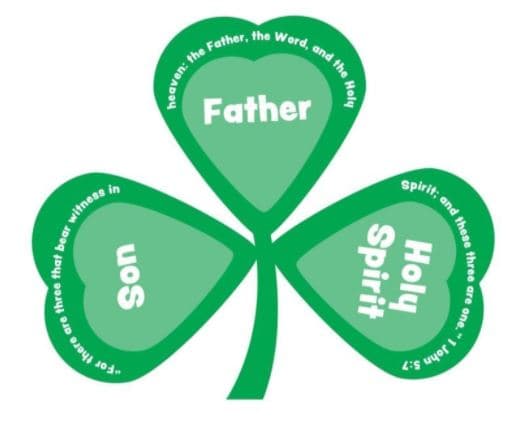
St. Patrick and the Shamrock
The origin of the shamrock goes back over a thousand years. It is said that St. Patrick, travelling to Ireland in 431 A.D. to convert to locals to Christianity, used the shamrock to explain the holy trinity: God the Father, Jesus Christ, and the Holy Spirit. This was an easy example to use as the local Celts already believed in three main deities; therefore, the three-in-one concept was easily explained using the three leaves of a shamrock. It was only through time that the meaning of each of the three leaves began to signify faith, hope, and love instead of the holy trinity.
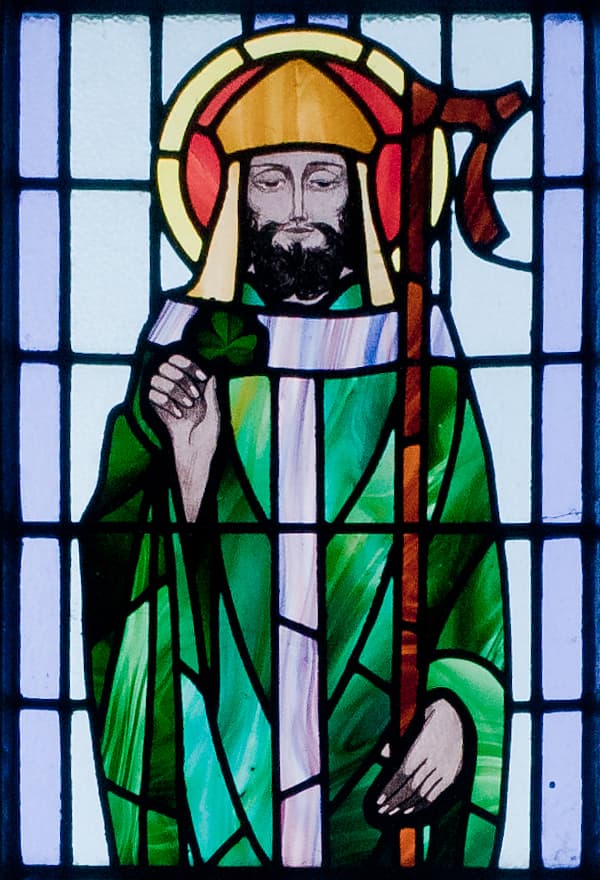
The Celts, the Gaelic, and the Shamrock
The earliest references to shamrocks is found in a poem dedicated to two Celtic gods, Tailtiu and Teltown. The Irish clover is also mentioned in the Didsenchas, a series of 176 pieces of early Irish literature dating back to the 11th century A.D. These writings compile a series of local legends that were passed down orally for many generations. Based on what is contained in the Didsenchas, it is safe to assume that the shamrock held a certain significance even before St. Patrick, which would explain why St. Patrick picked the shamrock to illustrate a Catholic doctrine.
The Shamrock Becomes the Symbol of Ireland
During the 16th century A.D., an English scholar named Edmund Campion described the Irish as eating shamrock, roots, and herbs of all types. Although there is no direct evidence that they did eat shamrock as part of their regular diet, other scholars mention the the Irish were eating shamrock as a last resort during times of starvation brought on by years of war.
Eventually, the Irish shamrock became the official symbol of Ireland even before Ireland gained its independence. The shamrock made its first official appearance on the banners of the Royal Clin Hussars in 1779, and soon after, shamrocks were added on other castle banners or family crests . During the Irish revolution in the 1910s and into the early 1920s, the Irish began wearing green–probably because green was associated with the shamrock.
The Popular Thomas Moore Ballad on the Irish Shamrock
In the 1800s, Sir Thomas Moore wrote a poem that gained great popularity in Ireland and increased the acceptance of the shamrock as a symbol of the soon-to-be independent nation.
Oh The ShamrockThrough Erin’s Isle,To sport awhile,As Love and Valor wander’dWith Wit, the sprite,Whose quiver brightA thousand arrows squander’d.Where’er they pass,A triple grassShoots up, with dew-drops streaming,As softly greenAs emeralds seenThrough purest crystal gleaming.Oh the Shamrock, the green immortal Shamrock!Chosen leafOf Bard and Chief,Old Erin’s native Shamrock!
Shamrocks and Four Leaf Clovers, What’s the Difference? – Tenon ToursShamrock vs Clover – DifferenceDindsenchas – WikipediaShamrock – WikipediaThe History of the Shamrock – FineGardeningWhy are Shamrocks Associated With Ireland? | Claddagh DesignWhy a Shamrock Is a Symbol of St. Patrick’s Day and Ireland | TimeSt. Patrick’s Day Traditions – HISTORY
More in Things we think

Things we think
Who Cursed Friday the 13th?
Buildings skip the thirteenth floor and nobody can tell you why. Four suspects, one of them a real atrocity — and the answer is not the one everybody gives.
Things we think
Origins of Emperors, Kings, Kaisers, Rex, and Dictators
The words we use for rulers reveal the complex history of power and governance. Trace the linguistic roots of titles that shaped civilizations across centuries.
Things we think
The Lucky, Protective Powers of The Horseshoe
Hanging a horseshoe over your door is a tradition spanning continents and centuries. The belief in its protective power blends blacksmith mythology, iron magic, and Christian legend.